In the season of late winter early spring the dominant dosha is Kapha. Kapha represents the elements of earth and water and this is a time when nature shows us how to rest. However, since humans are not trees, we need to move in the world in winter in order to survive. This restful energy can become out of balance or excessive and turn towards depression or stagnation.
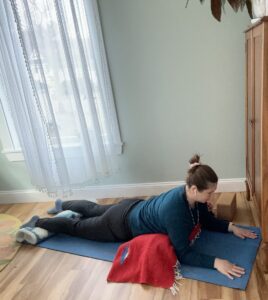
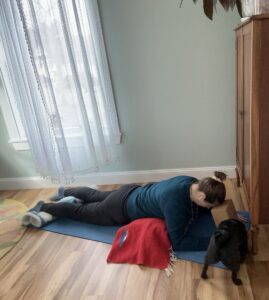
Remember that the intention of a restorative practice is to support your physical body until you do not feel tension or a stretching sensation. For this reason the more props, usually, the better! Gather a soft surface like a yoga mat or rug, a yoga bolster and/or pillows, a few blankets and maybe a block or similar object (book, small stool etc). I will be guiding you into a supported sphinx pose. Take a look at the picture and you may be able to anticipate your needs. In this posture you will lay on your belly so make sure you have a soft surface like a yoga mat, folded blanket, or both under your abdomen and legs. If you know that your ankles don’t like to be stretched in the front or you need a different angle for your knees try a rolled up blanket under the front of the ankles. You will want a pile of pillows or a yoga bolster under your chest to keep it lifted but supported. Finally find something like a yoga block to rest your head on.
To build the fire and balance winter’s natural low energy try focusing your attention on your inhalation. See if you can feel your inhalation go all the way from the top of your head to your toes. Make it long and slow. Then just let the exhalation happen without giving it as much of your attention. Imagine you can make the line from your head to your toes longer with every inhalation.
Rest. You can benefit for holding this posture as short as 1 minute and as long as 8 minutes. Pay attention to your body and practice giving it what it needs.