In the season of late winter early spring the dominant dosha is Kapha. Kapha represents the elements of earth and water and this is a time when nature shows us how to rest. Societally January is the season of new year goals, intentions, and often new action towards healthier habits. However, it’s not a good time of year to keep that fire of action and change going. It may be more productive to take a beat and lean into Kapha Season. A time of rest, when the earth is calm and quiet.
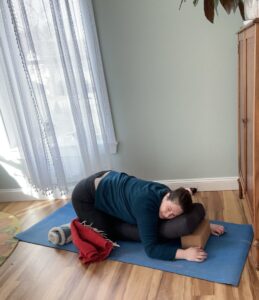
Remember that the intention of a restorative practice is to support your physical body until you do not feel tension or a stretching sensation. For this reason the more props, usually, the better! Gather a soft surface like a yoga mat or rug, a yoga bolster and/or pillows, a few blankets and maybe a block or similar object (book, small stool etc). I will be guiding you into a wide legged child’s pose. Take a look at the picture and you may be able to anticipate your needs. You can put a blanket behind your knees if end range bending is not comfortable. You can also put a blanket under your ankles if pointing your ankles feels like a stretch. You will want support under your trunk, pillows or bolster, and possibly under your forehead. If your head is turned be sure to turn your head the opposite way halfway through your practice.
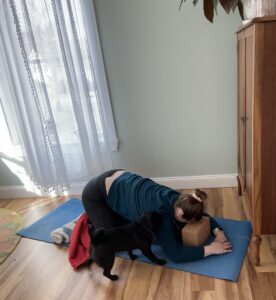
When you are comfortable I welcome you to practice a simple pranayama. Start by noticing the length of your inhales and exhales. Then consciously make your exhales twice as long as your inhalations. If this is too much counting you can also just try to make your exhale as long as possible, but only to the point that it does not add tension to your body. Just the attention to your exhalation will help elongate it.
Rest. You can benefit for holding this posture as short as 1 minute and as long as 10 minutes. Pay attention to your body and practice giving it what it needs.
